Repair vs. Replace: When Does It Make Sense to Refurbish Your Dumpster?
A new roll-off container runs $4,500–$8,000+ before it ever earns a dollar. Most of the beat-up cans that come through our Ocala shop don’t need that. Here’s the math we use every day to call repair or replace — honestly.
The 50–60% Rule
If the frame is straight and the repair estimate comes in under roughly half the cost of a new unit, repair it. That one rule settles most of the calls we get.
Here’s the arithmetic behind it. As of 2026, a new roll-off container typically costs somewhere in the $4,500–$8,000+ range depending on size, steel gauge, and what the market’s doing. Front-load cans cost less, but the math works the same way. Every one of those dollars has to be earned back by the container sitting on a route — and a container waiting on a manufacturer’s backlog isn’t earning anything either. A refurbished can is usually back hauling before a new one would even ship.
So the real question is never “can it be fixed?” Almost anything can be fixed. The question is whether the repair costs less than 50–60% of replacement and the container has enough structural life left to earn that money back. If both answers are yes — and for most of what we see, they are — repair wins. If either answer is no, we’ll tell you to stop putting money into it. We’d rather lose one job than have you drag a dead can back here in six months.
Not sure which side of the line your unit falls on? Send us photos of the damage through our quote form and we’ll give you a straight answer before you spend anything.
The Damage We Fix Every Week
The overwhelming majority of “worn out” containers have one or two specific problems — not a hundred. These are the repairs that make clear economic sense:
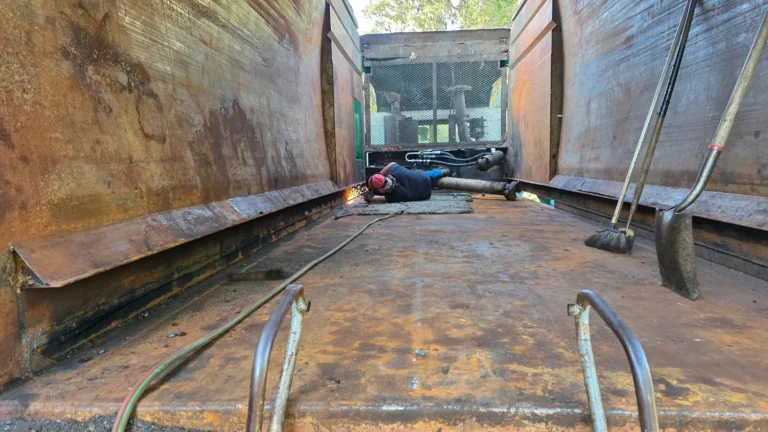
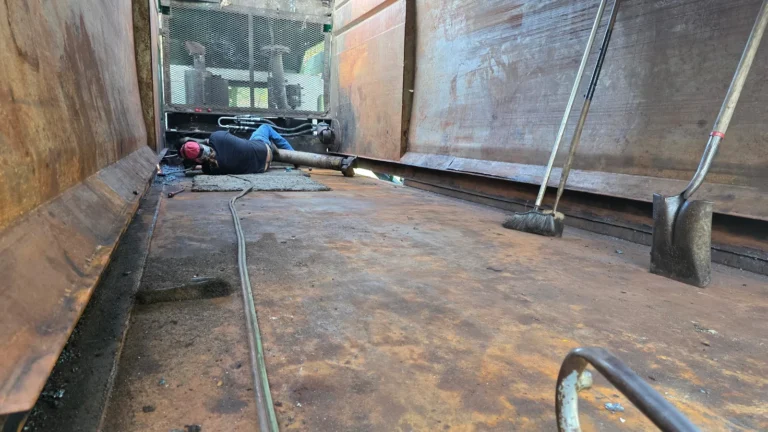
- Rusted-out floors. The #1 killer. Florida humidity plus wet loads rot floors from the inside. We cut out the soft steel and weld in new plate — sections or the whole floor.
- Rail and hook damage. Bent rails, worn hooks, and torn-up rollers on roll-offs get straightened or replaced. Cheap fix compared to what a dropped can costs you.
- Doors, hinges & latches. A tailgate that won’t seal leaks on every haul. Rebuilt doors, new hinges, new latches, new seals — routine work.
- Wheels and casters on front-load cans. Hours to fix, not days.
- Cracked or split welds. Seams split from dead-lift abuse. We gouge them out, re-weld, and reinforce so the repair outlasts the panel around it.
- Rust and rough paint. If it’s structurally sound but looks condemned, a full refurb — prep, prime, repaint, logos — puts a nearly-new can on the route for a fraction of new.
All of this is standard work for our dumpster and roll-off container repair crew — and you can see real floor replacements and weld repairs from our shop in the gallery. No stock photos; that’s our floor plate and our welds.
Damage Type → Repair or Replace
Rough guide from the shop floor. Exact numbers depend on container size and how far the damage has spread — that’s what the photo quote is for.
| Damage | Typical fix | Lean | Rough cost band |
|---|---|---|---|
| Soft or holed floor sections | Cut out rot, weld in new plate | Repair | Low–moderate |
| Floor gone end to end | Full floor replacement | Repair (if walls & frame are sound) | Moderate — still well under half of new |
| Bent rails, worn hooks or rollers | Straighten or replace rail/hook hardware | Repair | Low |
| Doors won’t close or seal; hinges shot | Rebuild door, new hinges, latches, seals | Repair | Low |
| Wheels/casters worn or gone (front-load) | Replace wheel sets | Repair | Low |
| Cracked welds, split seams | Gouge out, re-weld, reinforce | Repair | Low–moderate |
| Structurally sound but rusty and ugly | Full refurb: prep, prime, repaint, logos | Repair (refurbish) | Moderate |
| Bowed or bulged side walls | Straighten or section-replace wall panels | Usually repair — we’ll look first | Moderate |
| Twisted or cracked main frame / long rails | Major structural rebuild | Replace, usually | High — often past 50–60% of new |
| Steel thin everywhere (advanced corrosion) | There’s nothing solid left to weld to | Replace | High — repair money is wasted here |
Cost bands are relative to a new unit at $4,500–$8,000+. “Low” means the kind of invoice you don’t think twice about against those numbers; “high” means it’s time to run the 50–60% math carefully.
When Replacement Is the Right Call
We fix containers for a living, and we’ll still tell you to buy new in three situations:
The Frame Is Done
A twisted main frame or cracked long rails means the container’s skeleton has failed. You can straighten and gusset a frame, but on a badly racked can the labor climbs fast and the geometry never fully comes back. That’s replacement territory.
Repair Tops 50–60% of New
When the estimate crosses roughly half to two-thirds of a new unit’s price, you’re paying used-can money for used-can steel. Put that budget toward a new container instead — and let us keep your other cans out of this situation.
Nothing Left to Weld To
Age itself doesn’t condemn a container — thin steel does. When corrosion has eaten the panels down to where fresh welds have nothing solid to bite, every repair is temporary. We’ll tell you honestly when a unit is past that point.
Inside a Full Container Refurbishment
“Refurbish” isn’t a coat of paint over rust. Done right, it’s a rebuild that resets the clock on the container. Here’s what happens at our shop:
1 · Assess & Quote
Send photos or drop the can off. We map what’s rot, what’s sound, and what it’ll cost — and we run the repair-vs-replace math with you before any torch gets lit.
2 · Cut Out the Rot
Soft floors, rotten wall sections, and failed doors get cut out completely. New steel plate goes in where the old floor was — not patched over it.
3 · Structural Welds
Rails, hooks, corners, and seams get re-welded by guys who’ve spent years on this exact steel. The weld should outlast the panel around it, or it wasn’t done right.
4 · Prep & Paint
Surface prep, prime, and a full repaint — with your logos put back pitch perfect. The can that leaves looks like the can you bought, because structurally it nearly is.
Same decision framework, bigger machine: if you’re weighing a worn-out compactor instead of a can, our commercial compactor repair crew runs the exact same honest math on those.
Repair vs. Replace — Common Questions
The questions haulers and property managers actually ask us. Have a specific unit in mind? Send photos.
How do I know if my dumpster floor is worth repairing?
Is it worth repairing a 10-year-old container?
What does a new roll-off container cost in 2026?
Do I have to bring the container to your shop?
How long does a container repair take?
Not Sure? Send Us Photos.
Snap a few pictures of the damage and send them through our quote form. We’ll tell you straight whether the can is worth fixing, what it’ll cost, and when you’d have it back.