How Long Do Dumpsters and Roll-Off Containers Last? An Honest Guide
Ask a container salesman and the answer is “buy a new one.” Ask the shop that cuts the rot out of them every week and you’ll get the real number: 10 to 20 years — and which end of that range you land on is mostly up to you. Here’s what actually decides it.
10–20 Years — But the Floor Decides
A steel roll-off or front-load dumpster on a working route typically lasts 10–20 years. The frame almost never wears out first — the floor does.
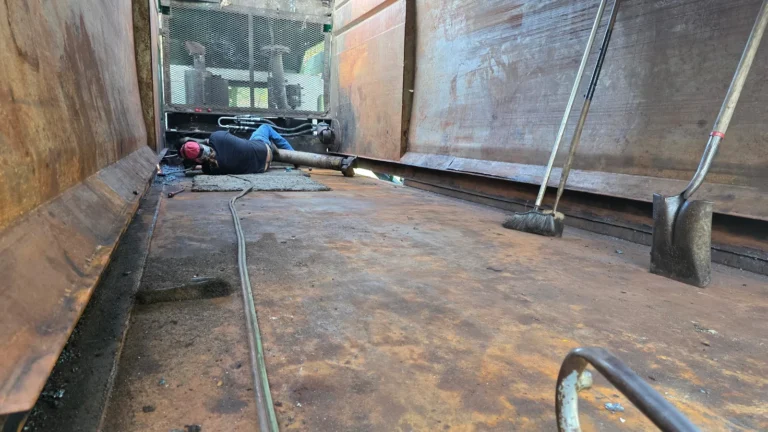
Here’s what two decades of Florida containers coming through our Ocala shop has taught us: a container doesn’t die of old age, it dies of floor rot. Wet loads sit on the same square feet of steel haul after haul, Florida humidity works on it from underneath, and five to eight years in, the floor goes soft while the walls and frame above it are still solid. At that point the container isn’t “worn out” — it’s one repair away from another decade of work.
That’s why the honest lifespan answer is a range as wide as 10–20 years. A can that gets a floor replacement and a repaint at the first soft spot keeps earning; a can that runs until the floor drops a load onto the truck bed — or the customer’s driveway — gets retired early and replaced at $4,500–$8,000+ for a new roll-off. The difference between those two outcomes isn’t luck. It’s maintenance timing.
Not sure how much life is left in yours? Send us photos through the quote form and we’ll tell you straight — no charge for the opinion.
The Five Things That Kill Dumpsters Early
Every prematurely dead container we see died from one of these — usually two of them working together:
- Wet and heavy loads on the same cans. Concrete washout, wet demo debris, food waste — moisture trapped against the floor plate is what rots it. Haulers who rotate which cans catch the wet work get years more out of the whole fleet.
- Florida itself. Humidity year-round, and salt air if your route runs coastal. The same container ages faster here than it does in Arizona — which makes maintenance timing matter more, not less.
- Dead-lifting and drop abuse. Slamming cans down and dragging them loaded splits weld seams and bends rails. A split seam lets water into places it never dries out of.
- Paint failure nobody fixes. Paint isn’t cosmetic — it’s the corrosion barrier. Once it’s scraped to bare steel and left, rust gets a multi-year head start before anyone calls us.
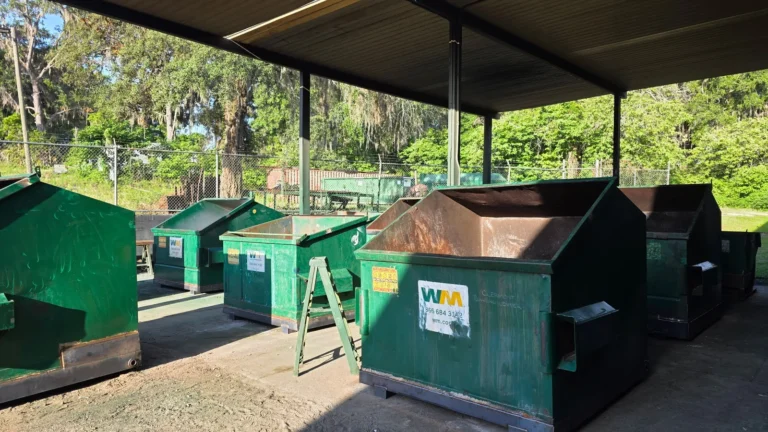
- Sitting dead on dirt. Containers parked in the weeds with trapped debris inside rot from both sides at once. An idle can corrodes faster than a working one that gets emptied and dried.
What Wears Out When
Rough service-life numbers from what rolls through our shop. Hard use and wet loads push everything toward the short end; rotation and upkeep push it long.
| Component | Typical service life | What ends it | The fix |
|---|---|---|---|
| Floor plate | 5–8 years under wet loads | Rot from trapped moisture | Section or full floor replacement |
| Doors, hinges & latches | 5–10 years | Impact, sag, seal failure | Rebuild — hours, not weeks |
| Paint & coating | 3–5 years in Florida sun | UV, scrapes, salt air | Prep, prime & repaint |
| Rails, hooks & rollers | 8–15 years | Lift wear, drop damage | Straighten or replace hardware |
| Walls & side panels | 10–15 years | Bulging, seam splits, thin steel | Section replacement, re-weld |
| Main frame & long rails | 15–20+ years | Racking, structural cracks | This one usually IS the container’s lifespan |
See the pattern? Everything above the frame line is repairable for a fraction of the $4,500–$8,000+ a new unit costs. A container’s real lifespan is the frame’s lifespan — if you keep fixing the parts that wear out on schedule.
How to Get 20 Years Instead of 10
None of this is complicated. It’s just done on time or not at all:
1 · Rotate the Wet Work
Don’t let the same two cans catch every concrete washout and food-waste job. Spreading wet loads across the fleet spreads the floor wear — the cheapest lifespan extension there is.
2 · Fix Floors at the First Soft Spot
A soft section costs a fraction of a full floor. A full floor costs a fraction of a new can. Every stage you wait multiplies the bill — catch it at stage one.
3 · Repaint Before Rust Wins
When paint is scraped through to steel, the clock is running. A prep-and-repaint every few years is corrosion protection, professional appearance, and resale value in one line item.
4 · Refurbish at Mid-Life
Around year 8–12, a full refurb — floor, welds, doors, paint — effectively resets the container. That’s how the 20-year cans get to 20. Our dumpster and roll-off repair crew does this work every week.
Already staring at a can that’s past due? The repair-or-replace call has real math behind it — we wrote out the 50–60% rule we use to call repair vs. replace so you can run it yourself. And if it’s your garbage or roll-off truck bodies aging out instead, the same logic applies — that’s what our truck body repair and refurbishment bay is for.
Container Lifespan — Common Questions
What haulers and property managers ask us about aging containers. Got a specific unit? Send photos.
How long does a roll-off dumpster last?
How long do front-load commercial dumpsters last?
Is it worth repairing an old dumpster instead of replacing it?
What makes dumpsters rust so fast in Florida?
Does refurbishing a container actually extend its life?
Want the Long End of the Range?
Send photos of your cans — floors, doors, paint — and we’ll tell you which ones need work now, which can wait, and which aren’t worth another dollar. Straight answers, from the shop that fixes them.